Nearly One in Three UK Travellers Have Booked a Hotel Recommended by AI

Younger travellers are most likely to act on AI recommendations, but most people who have done so still want to make the reservation themselves.
Almost a third of UK adults surveyed by Talker Research had booked a hotel recommended by artificial intelligence, according to research commissioned by hotel technology provider Aven Hospitality. Yet even among travellers who have acted on an AI recommendation, most would prefer to stay in charge of the booking.
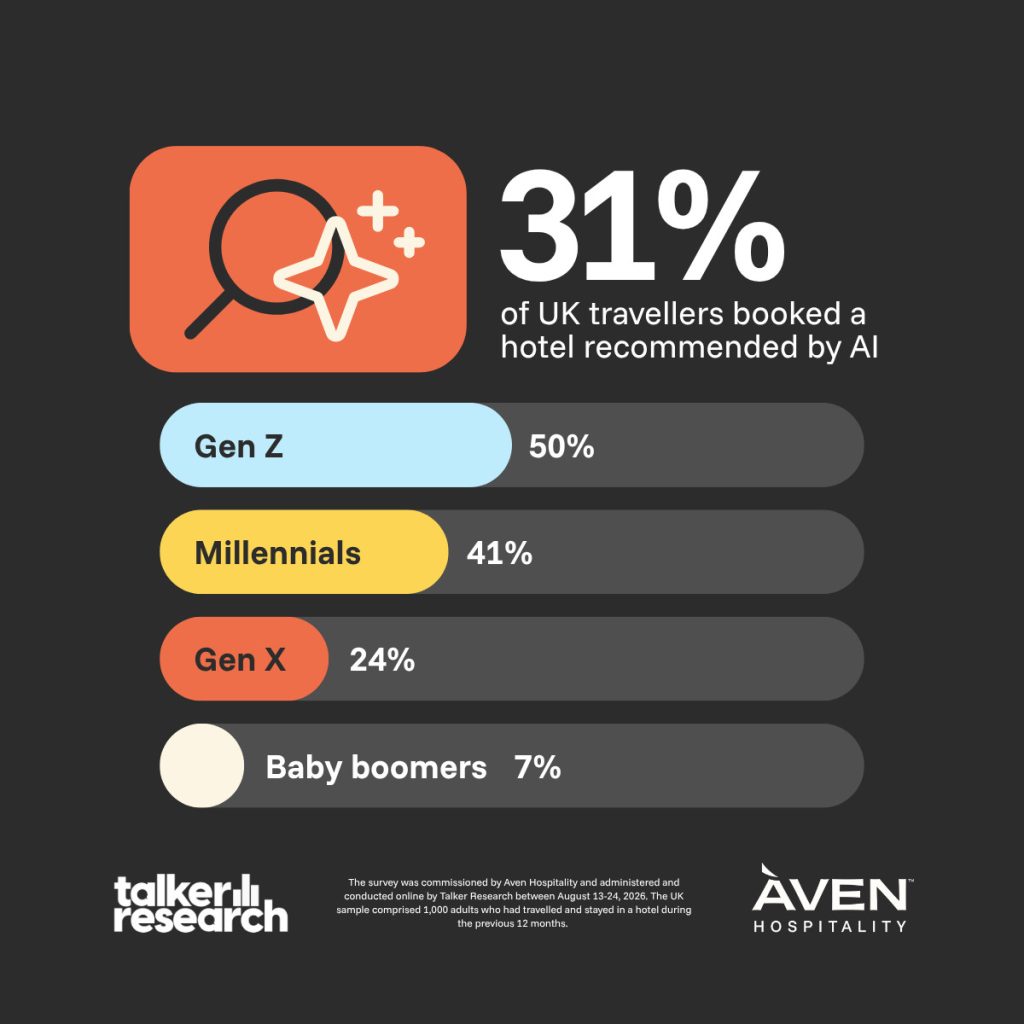
The survey polled 1,000 UK adults who had travelled and stayed in a hotel in the previous 12 months. Overall, 31% said they had booked an AI-recommended hotel. That rose to 50% among Gen Z respondents and 41% among millennials, compared with 24% of Gen X respondents and 7% of baby boomers.
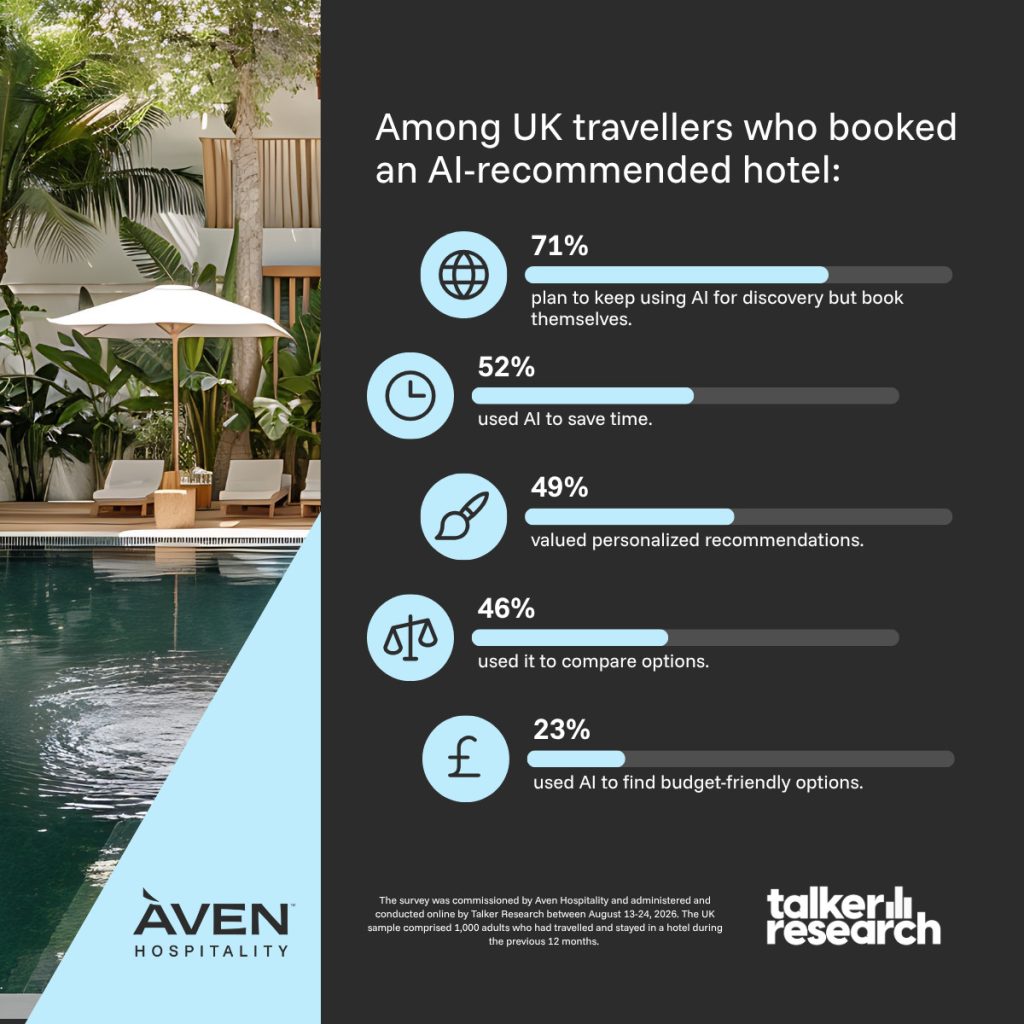
Among those who had booked an AI-recommended hotel, 71% said they planned to keep using AI to find hotels while making the reservation themselves. The remaining 29% intended to use AI for both recommendations and bookings.
“AI is changing how travellers find hotels, but discovery is only part of the journey,” said Noreen Henry, Chief Revenue Officer at Aven Hospitality. “Hoteliers need to ensure their properties are accurately represented wherever guests search, while making it easy to turn interest into a confirmed booking. Connecting those experiences is how hotels can capture demand as travel shopping evolves.”

Travellers Use AI to Save Time and Compare Hotels
Search engines remain a common starting point, with 46% of respondents saying they typically use them for hotel recommendations. Tripadvisor was cited by 42% and online travel agencies by 40%. In a separate question about travel searches more broadly, 66% said they had used AI to look for travel options and 48% said they used it frequently.
Among respondents who had booked an AI-recommended hotel, 52% said they turned to AI to save time, 49% valued personalised suggestions and 46% said it helped them compare options. A further 16% said AI had suggested hotels they would otherwise have overlooked.
Almost all respondents in that group (97%) rated the recommendation as very or somewhat accurate. Across the wider UK sample, finding budget-friendly options (23%) and researching hotels (21%) were more commonly selected as the task respondents would most trust an AI agent to handle. Just 12% chose booking accommodation.
Complicated Checkouts Send Guests Elsewhere

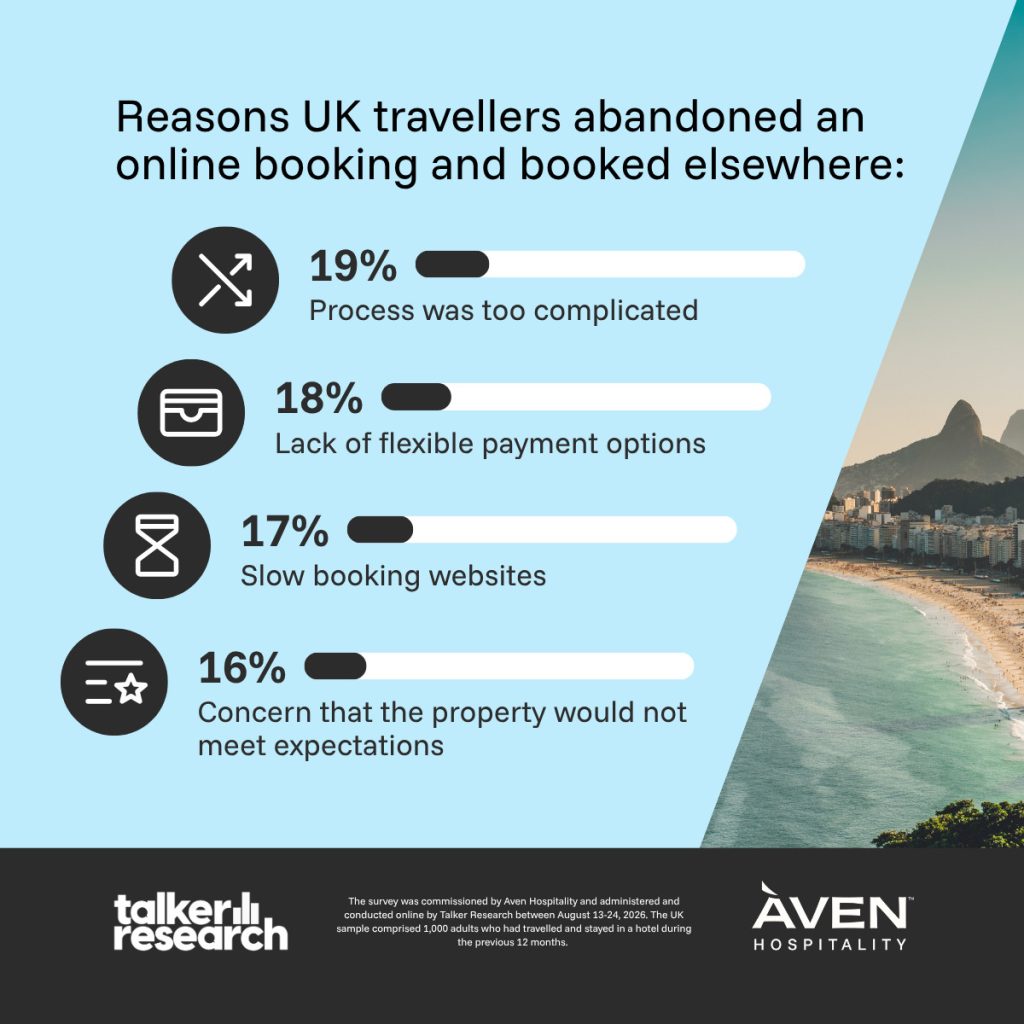
Nearly one in five respondents (19%) said they had abandoned an online hotel booking and booked elsewhere because the process was too complicated. Limited payment options (18%), slow booking websites (17%) and doubts about whether the property would meet expectations (16%) also prompted travellers to look elsewhere.
The survey also found that 13% had booked accommodation for a specific amenity that turned out to be unavailable. A further 12% said they had booked a property that was falsely advertised or failed to meet their needs. Among respondents who had experienced a travel disappointment, 21% said they subsequently began checking amenities, policies and other details directly with properties.
For hotels, that means keeping room details, facilities and policies consistent wherever guests find them. A traveller who discovers a property through AI may still check those details elsewhere before deciding where to book.
About the Survey
Talker Research conducted the online survey from 13 to 24 August 2026 on behalf of Aven Hospitality. The UK sample comprised 1,000 adults who had travelled and stayed in a hotel in the previous 12 months. Findings about travellers who had booked an AI-recommended hotel were based on 305 respondents. Findings about changes in booking behaviour following a travel mishap were based on 696 respondents. Percentages were rounded to the nearest whole number.