UK Pilots’ Union Explains Bomb Threat Response After European Flight Disruption
The British Airline Pilots’ Association (BALPA) has explained how airlines decide when to alert flight crews to a bomb threat after a series of alerts disrupted flights across Europe, including services from Luton, Heathrow and Manchester.
The union issued its statement on Thursday 5 November after several days in which aircraft were diverted or searched and some airport operations were temporarily interrupted. The disruption continued on the day of the statement, although threats received by Heathrow and Birmingham airports were assessed as not credible and both airports continued operating normally, ITV News reported.
UK Flights Diverted as Threats Disrupt European Routes
On Monday 2 November, a Wizz Air flight from London Luton to Sofia diverted to Budapest after the airline received a bomb threat while the aircraft was in flight. Wizz Air said the plane landed safely and was taken to a designated stand, where authorities carried out security checks.
The following day, a LOT Polish Airlines service from Heathrow to Warsaw-Chopin made an unscheduled landing at Warsaw-Modlin after a bomb alert. The aircraft, which was carrying 181 people, landed safely. Operations at Warsaw-Modlin were temporarily suspended. ITV News also reported that more than 100 passengers and crew disembarked from a Manchester flight in Murcia after authorities received a threat shortly before it landed.
Further alerts followed on Thursday. An Aer Lingus flight from Dublin to Rome diverted to a military air base in northern France, where a search found nothing of concern. EasyJet said police met two of its flights, from Newcastle and Glasgow, on arrival in Prague as a precaution over a security-related matter. Passengers disembarked normally.
How Airlines Decide When to Alert Pilots
BALPA’s statement addressed a question raised by the different responses. Why might one alert lead to an unscheduled landing while an airport that receives a threat continues operating normally? The union explained that specialist assessors grade threats to aircraft before deciding whether to alert the flight crew. Once notified of a credible threat, the captain takes charge of decisions concerning the aircraft, guided by the airline’s procedures. BALPA described the process in general terms and gave no assessment of the individual incidents.
Joji Waites, BALPA Director of Flight Safety, Policy and Regulation, said:
Aviation has historically been a target for bomb threats but the industry has well proved mechanisms for dealing with such threats.
When a threat to an aircraft has been notified to the airline the threat is passed to a team of assessors. These assessors use standard processes to grade the threat and decide whether the threat is Red (credible), Amber (partially credible) or Green (not credible). Amber is not considered an appropriate assessment if the plane is airborne.
If the threat is assessed as not credible staff on the plane will not be informed of it.
However, when a threat is assessed as credible (red or amber) the flight crew will be informed immediately and they will carry out company procedures for a credible bomb threat.
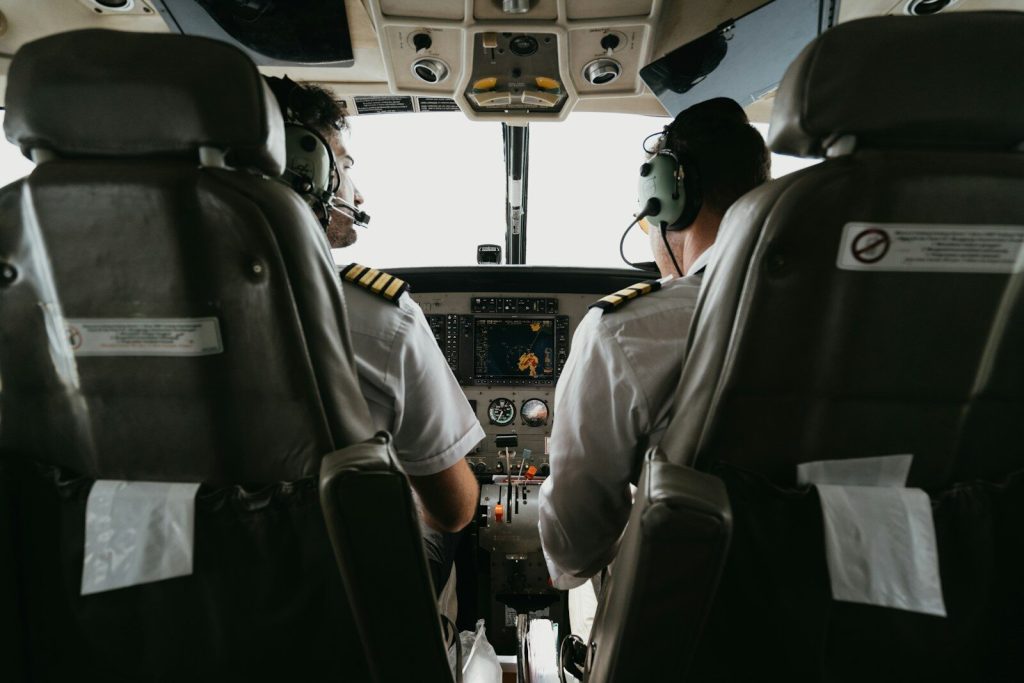
From the moment the flight crew is notified of a credible bomb threat, commander of the aircraft – the captain – is in command and will make all the decisions, guided by the appropriate checklist, for the safety of their aircraft. Usually if a plane is still on the tarmac that will mean an evacuation, and if it is in the air the priority will be to land the plane as soon and as safely as possible.
Pilots are highly trained and skilled professionals. Their expertise is invaluable in insuring passenger safety, and keeping aviation one of the safest forms of transport there is.
Sources and References
- British Airline Pilots’ Association statement, 5 November 2026 — https://www.balpa.org/2026/11/05/british-airline-pilots-association-balpa-statement-on-recent-bomb-threats/ www.balpa.org
- Sky News, Wizz Air diversion from Luton to Budapest — https://news.sky.com/story/wizz-air-flight-latest-plane-from-london-to-bulgaria-diverted-to-budapest-after-bomb-threat-13605126 news.sky.com
- Sky News, bomb threats affecting multiple flights, including the Heathrow departure — https://news.sky.com/story/bomb-threats-reported-on-multiple-flights-including-two-from-uk-airports-13607460 news.sky.com
- ITV News, threats affecting European flights, including the Manchester departure — https://www.itv.com/news/granada/2026-11-03/hundreds-evacuated-from-planes-as-bomb-threats-hit-flights-across-europe www.itv.com
- ITV News, threats received by two UK airports and further flight disruption on 5 November — https://www.itv.com/news/2026-11-05/two-uk-airports-received-threats-as-bomb-alerts-impact-flights-across-europe